Saturday, December 7, 2013

This Christmas, support the little guy!

I have a soft spot for handcrafted, unique items. Maybe the flyfisher in your life does too, or maybe they'd rather buy a handmade lanyard from a mother of two in Arkansas than from a global corporation.

I browsed through Etsy for some handmade, fly fishing related items that are sure to please any flyfisher this holiday season, and here are my favorites:

Mike Worthen Fine Art

Gorgeous, black and white sketch prints of flyfishing scenes. For me, these prints evoke the past, these could be my grandfather's hands, as seen by a five year old me.


Laurel Mountain Lanyards

I'm still warming up to the idea of a lanyard, but they certainly have their place, and Laurel Mountain Lanyards offers large variety of reasonably priced and very fetching lanyards.


 Equally fetching lanyards, but differently so.


I absolutely love her whimsical and intricate take on fishing artwork. One of these will land on the wall above my bench before 2014 is out.


BadAxeDesign

I ordered a few hats from block print artist Jonathan Marquardt a few months back, one for myself, and one for each of my little kids. Despite having a ton of hats, the trucker hat from BadAxe is my favorite. I'm particularly short on hair, so for me to brave the Swiss winter in a mesh cap says quite a bit.


Fishing for Gyotaku

Traditiononal Japanese fish printing. Extremely cool looking, and would likely make an excellent gift for a Tenkara fan in particular.


SBIXELArt

Shawn Bichsel is another artist, providing his designs as prints, cards, and wooden business card holders. His take on a mayfly:


TafSchaefer Designs

Handmade brass belt buckles with a Royal Wulff. Awesome.


If you can, think of the little guy while shopping this year and consider buying a gift or two made one at a time, by hand, and by an individual. You'll be helping them have a nice Christmas too!


Monday, December 2, 2013

Is that an Olive in your Salsa or are you just Amber to see me?


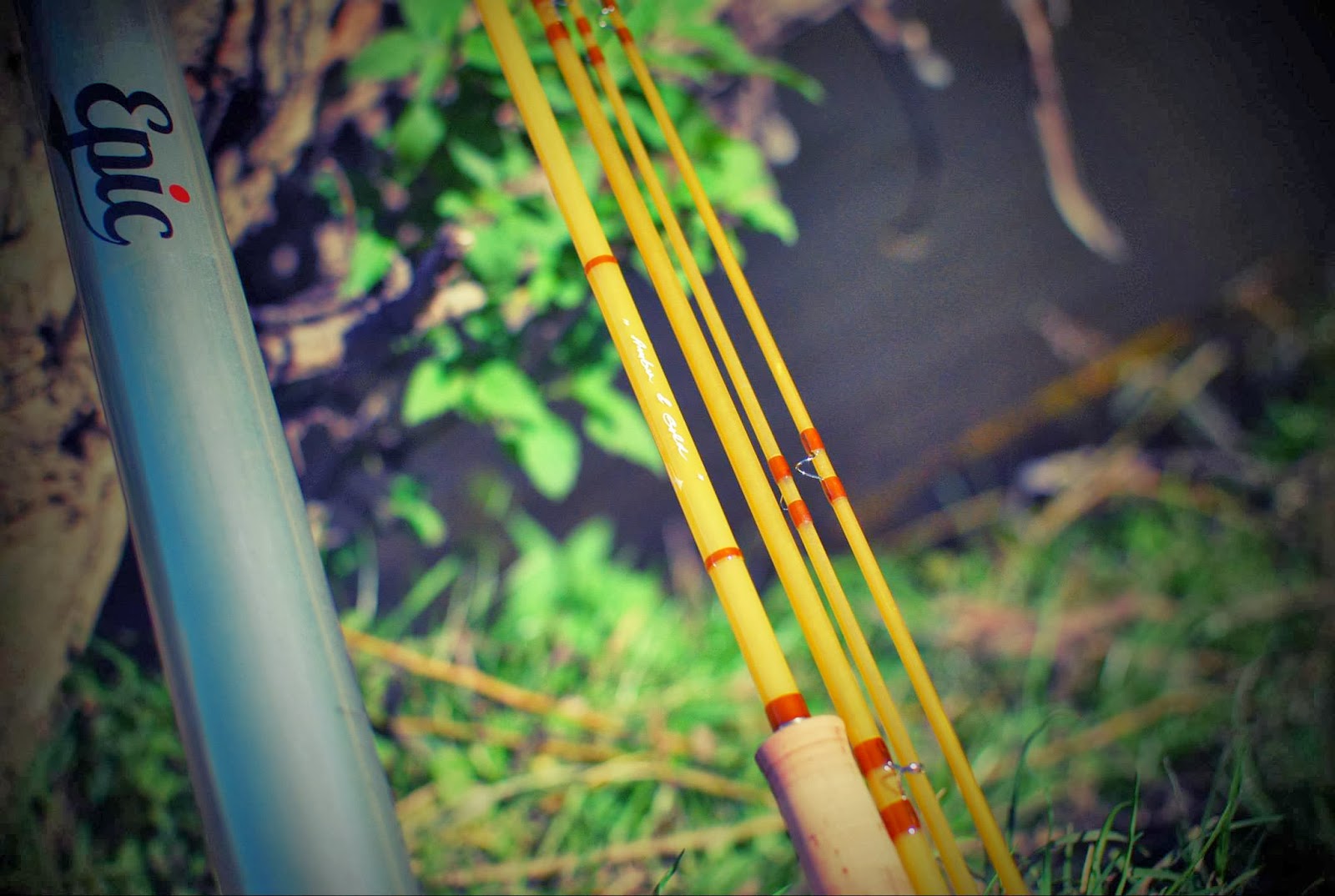
Carl McNeil is a man on a mission, a mission to bring some color to the often monochromatic world of fly rods. Carl, one of just two F.F.F. Certified Master Casters in New Zealand, decided to branch out from fly casting instruction and infuse some life and color in the fly rod industry via his new company, Swift Fly Fishing. I'd say he succeeded, as his Epic blanks, thanks to a handpicked team of dedicated and incredibly talented builders from around the world, have been turned in to some of the most innovative and head turning rods available.


As they spread around the world, their potential disruptive force is apparent, not only because of the the bright colors rarely seen in the relatively subdued and drab world of fly rods or the use of fiberglass, but his entire philosophy of rod design is somewhat at odds with the status quo. According to Carl, there was a niche to be filled in the world of fly rods, and the trend towards faster graphite rods isn't a move in the right direction.

When I first emailed him, I just had a small handful of questions and was very pleasantly surprised at the wealth of information Carl provided. Here he explains the long, involved process at arriving at his tapers, his reasoning behind his introduction of these radically different fly rods, and gives us an incredible insight into his design philosophy, and his take on the shortcomings of modern rod design:

The Rods


Oliver - As a casting instructor, I imagine you knew exactly what you wanted when it came to the tapers for your rods and that you were quite particular. How long did it take for you to arrive at the current tapers? How many prototypes ended up in the trash? And When it came time to choose a blank material, why fiberglass over graphite?


Carl - Initially I didn't know exactly what I wanted, but I did know that my graphite rods weren't cutting it for the type of trout fishing I was doing. I was also seeing a lot of guys rocking up to casting workshops with the latest super stiff fly rod and really struggling to put a bend in it. Fly casting is all about putting a bend in the fly rod & controlling the tip, loading and unloading. Very fast rods make this much more challenging, over the past 5 or 6 years we've seen more line manufacturers producing overweight fly lines to counteract this - that is, lines that are outside the AFTMA standard for their designated weight. Weight and a half lines are now the norm, in order to "load todays modern fast action rods" - apparently. It's become common to see anglers purchase a fast 5 weight fly rod and then over-line it with a 6, and that 6 line is a weight and a half. While this is all subjective and each should follow their bliss, I see absolutely no sense in buying a Lamborghini and then trying to limit it's performance by piling a few bags of cement in the trunk.

Over-lining does not change the intrinsic properties of a fly rod. If you want a very quick rod, buy one. It's quick and snappy because it's a comparatively fast taper built on very high modulus materials. It's resistance to bending is high, the recovery speed is high. Stringing it up with the next line size so that you can feel it load at 30 feet it is akin to strapping a bag of cement to it.

If you wanted a slower, softer action rod - well, that's what you should have gone shopping for and come home with.

I wanted fly rods that would bend.

And this is where we start to uncover the marketing con' that we've all been inadvertently party to over the last decade. There is no universally accepted standard for labelling fly rods, the AFTMA line standard is for labelling fly lines and not fly rods. (the mass in grains of the first 30 feet) - Putting the number 5 on a fly rod is really just an arbitrary designation that the manufacturer saw as being desirable for his design.

One company's 7 weight is another companies 5 weight. In fact, if you want to present the market with a very fast, stiff rod, simply build what could be called a 7 and label it as a 5. My company's 5 is now much faster and stiffer than your brand. And this is almost exactly what we see in the industry. How do you think rods have become incrementally faster and stiffer year upon year? Yes, no doubt we've seen gains in material, resins and the composites used to construct fly rods. But I think you'll find that the easier way to get this years faster, stiffer rod is to take what was last years number 7 mandrel and call it this years 5 weight and rename it.

For arguments sake, If you took four well known fly rod models from different companies, all designated 5, and then compared how they bent under a static deflection test you are obviously going to see huge variation in how deeply they bend. I'm not talking about lockup point, or action here - just how far they deflect down between the butt and the tip for a given static weight. As an example I had some involvement with one company's new designs a year or so ago. One of the rods that was tested was clearly a good 7, or a very fast 6 at best. It went to market labelled as a 5 weight.

So how can you get any objective baseline comparison of how a rod bends? - there is actually a system to do it. It's far from perfect, but the CCS, Common Cents System invented by Dr Bill Hanneman, does provide a system and set of standards were fly rod actions can be compared. Admittedly it's a static deflection test and the loads on fly rods are very much dynamic and active. Also at least one of the numbers in the formula has been arbitrarily chosen (a deflection of one third the rods total length) However, the CCS is really all we have at the moment. And while it's not so valuable in actually describing a fly rods action as the CCS was originally intended, it is very valuable in making comparisons on relative stiffness and action. As a note - all the Epic tapers feature an AA (Action angle) of around 70 degrees - which puts them squarely in the fast category against any fly rod. The CCS can be found here http://www.common-cents.info

A very stiff rod is simply not as capable of loading up and throwing a short accurate line as a medium or slower action rod is - as much as the marketing department might have you believe. So, many rods are getting stiffer and stiffer, line manufacturers are beefing up their lines so that the rods bend and people can actually fish with them - it's like the Cold War…

In short, for fly fishing anyway, faster and stiffer is not always better. Don't get me wrong, stiff can also be great and I'll not be selling all my graphite sticks any time soon.

Back on topic...
I wanted to fish lighter lines for stealthier dry fly presentations so decided to ditch my usual graphite 6wt for a season and go with a much smaller softer rod, and while my 7ft plastic 4wt could certainly present the line I wanted use, it most certainly didn't have the balls to turn and land the fish I was chasing. Getting a 5lb brown to the net with a dainty little 4wt involved a fair amount of trepidation and careful manoeuvring to avoid rod tips getting broken.

The one thing that I really don't like about light tackle is the necessity to play big fish out in order to get them landed. Many anglers proclaim to be Catch and Release practitioners and yet play the shit out of a fish once hooked. There is a direct correlation between time spent playing a fish and it's chance of survival after it is released. Overplaying a fish sends the mortality rate through the roof - as much as you might think that trout swam away quite happily, it more than likely died from the effects of exhaustion within an hour of release.

I'm of the "horse them in" school of fly fishing, for me fly fishing for trout is all about the deception. Once hooked the object of the exercise is to get the fish in and released in as good shape as is possible. All the guys I fish with are the same.

With all this in mind I wanted fly rods that could present delicately, load up at relatively short range and yet be very robust and with the lifting power of rods in heavier line classes. My first rod was a Japanese built hollow glass rod, translucent Olive green - It has (I still have it) a cheap closed cell foam grip - but it's still the prettiest rod I've ever seen - I wanted rods that looked like that. Fiberglass seemed an obvious choice.

I began looking all over at all sorts of materials & fly rods, including quite a few new and old glass models. I had no desire to reproduce anything that was in any way "retro" - let me be very clear, I am no fan of slow, sloppy, unresponsive e-glass like the rods of old. While I appreciate that there are a few big brand companies out there trying to reproduce the glass retro thing - I really don't get it. Those rods might have been good 30 years ago, but by today's standards - we'll, they really are crap casting tools. They died for a reason. While It's easy to get lost in the misty eyed romanticism of old school glass - My old [brand removed to protect Carl from the wrath of aficionados] really does cast like a bucket of poo. I get it out occasionally as a reality check, just to make sure we're not missing something - we're not.

Our search ended up full circle back here in New Zealand with Composite Tube Systems, a very clever Auckland company well versed in rolling excellent fly rod blanks. CTS was already rolling glass blanks, so that's where we started the development journey. We worked with Stephen Pratt, owner and designer to move from their already very capable factory tapers to something that matched what I was after. It took a little over 12 months and many prototypes & iterations before I had something that could be locked down and taken to market as an Epic.

The material we are using is not conventional fiberglass, nor is it a standard s-glass.
I'm now convinced that in sub 8ft lengths and in weights of 5 and below modern glass composites just make for a superior fly rod. They are smoother, many times stronger, more responsive and have far greater feel that graphite. They simply have more soul than plastic rods do. It's difficult to quantify, but the small glass Epics are just more fun to fish with & they cast like a dream. Longer rods in heavier weights - that's where Carbon Fibre excels. Glass is simply too heavy and slow to produce a really lively, responsive rod as you scale up. We do produce a 9ft 9wt glass monster called the 990 (Nine Ninety) - but it really is a glass enthusiasts rod. Most graphite casters would find it comparatively heavy and quite sluggish. It is however incredibly strong and loads up wonderfully with a short line.


Oliver - Speaking of lines, as a guy who knows what he's doing when it comes to casting, are there any particular lines you recommend for your tapers?

Carl - I think fly line choice is very subjective & quite complex. So much depends on the caster's style, their ability level and the type of fishing they are doing. Personally I'm a big fan of long belly lines, but I know that many guys who use our rods prefer heavier weight forward lines. We're working with a fly line company to develop something that will be a great match for the Epics.

Oliver - Are there any new tapers and/or colors in the works?

Carl - Yes, we have a new colour to be released in the new year, our Epic Rod builders are already building on it. A 3wt in our Epic FastGlass will make an appearance in late January /Feb.
We'll also release a remarkable graphite blank in 9ft 5wt & 6wt.


Fiberglass fibers on an Olive blank.


When I first cast an Epic rod a few months ago, I took the Salsa 686 from inside the relatively dimly lit fly shop and out into the daylight, where it not only came to life in my hands, but also visually as the sunlight shone through the blank. The first thing I noticed is that while the rod was sensitive, and, despite it being, as Carl terms it "Fastglass", it doesn't have an action I would consider fast in the world of graphite. I like medium action rods and bamboo and I felt very comfortable casting the 686. (As comfortable as one can be casting a rod in a parking lot. I'm not a particularly good caster to begin with and avoiding cars and "no parking" signs doesn't really help.) I've since cast the 580 as well, and they're light rods, doing most of the work for you. Exactly the kind of rod you want if you're going to be fishing all day, day after day.

The range of available blanks include the 476 (7 foot 6 inch 4 weight), 480, 580, 686, and the 990 (currently only available in blue), and they're available in the following colors:


Amber

So Blue

Nude

Olive

Salsa


The Builders


Oliver - Carl, you built up a network of rodbuilders that are incredibly effective at showing what's possible with your blanks. Did basically you approach these guys and hand them some blanks with the hope that something amazing will result?


Carl - Yep, pretty much. We launched with a promotion very generously supported by Cameron Mortenson of The Fiberglass Manifesto. Cameron shoulder tapped a few top builders that he suspected might be interested in taking part in the "Epic Rod Build" and trying out an Epic blank. Swift donated the blanks and the builders donated their time and expertise - We were astounded by the quality and craftsmanship of the completed rods. The finished Epics were then donated to The Fiberglass Manifesto's rod loan program so that anyone could take an Epic for a spin. It was a hugely fun, successful and rewarding promotion that got us introduced to some of the best rod builders out there - things only blossomed from there on.

The Epic blanks are somewhat faster and stiffer than other glass blanks so we were unsure how they would be received by the glass building fraternity. The response was excellent and these top builders have become a fundamental part of our business. I get to talk with at least one of them almost daily, their feedback and input is invaluable in our companies development, it's a great privilege.
We continue to be amazed at the endless creativity and talent demonstrated by these guys - the partnership has clearly shown me the value and advantage of working with a master craftsman to create a one off fly rod that is of heirloom quality. These custom rods are truly jaw-droppingly beautiful and supremely fishable. Everyone should commission at least one in their fishing career.


The diversity of the rods from Carl's team of builders is fascinating. Rods built on the same blank by Zeb Tonkavich and Christian Hörgren, for example, couldn't be less similar. Sparse, Scandanavian beauty on the one hand, and stunning, unconvential style from the new world on the other.

Photo and rod by Christian Hörgren of Sweden
http://finetackle.blogspot.com
(On the new, not yet named color)

Photo and rod by Christian Hörgren of Sweden
http://finetackle.blogspot.com

Photo and rod by Zeb Tonkavich of Pennsylvania, USA.
http://www.snowmancustomrodworks.com

Photo and rod by Zeb Tonkavich of Pennsylvania, USA.
http://www.snowmancustomrodworks.com

Photo and rod by Shane Gray of Michigan, USA.
http://www.graywolfrods.com

Photo and rod by Shane Gray of Michigan, USA.
http://www.graywolfrods.com


Photo and rod by George Minculete of Romania
http://tightloopflyrods.blogspot.ro

Photo and rod by George Minculete of Romania
http://tightloopflyrods.blogspot.ro

The Kit

If you want an Epic rod of your own, you'll either have to order one from a custom rodmaker such as the ones shown above, or build one yourself, as Swift fly fishing currently doesn't sell complete rods. Fortunately, Carl invested quite a bit of effort into making the rod building experience as smooth as possible, even for a first-timer:

Oliver - You've put a substantial amount of work into making it as easy as possible for your customers to make a beautiful fly rod and there isn't really a rod building kit on the market that can compete in terms of the quality of components. Why the focus on the rodbuilding when so many other companies either sell just the blanks, or the complete rod? Are you planning on offering complete rods in the future?

Carl - Our goal is to produce the very finest fly rods available and a large part of that is to finish our blanks with the very best hardware made. Jeanie and I have spend almost two years producing or sourcing the very best cork, reel seats and guides out there - it seemed entirely logical to offer these to people that wanted the satisfaction of building their own rod too. Building your own fly rod is incredibly satisfying and a huge amount of fun. I had to build up every prototype we tested and got a real kick out of it, still do. Truth be told, building a fly rod is not complex or particularly difficult (unless you are trying to emulate the works of art produced by our Epic Rod builders - but those guys are on a whole other level)

If you can tie a fly you can build a fly rod. Much of the complexity and confusion arises from understanding and selecting matching and complimentary components. We've had to do all this for our production rods - so why not make it easy for everyone else and share this with others?

It could be said that we risk devaluing the Epic brand by letting amateur builders have access to our blanks and components - but if the goal is to get truly remarkable gear into the hands of more fly anglers then why wouldn't you offer premium components to everyone who wanted to join in?

We'll release a full "Ready to Wrap" rod kit early in the new year - there's nothing like it out there, the manual alone is pretty damn good. I would have had the Epic kit released earlier, but fine tuning on one component has meant we've had to wait until it is perfect.

Our company will produce made to order rods sometime in the first quarter of 2014. They will not be "custom" - for custom creations you'll need to go see one of our Epic builders, or make your own.


I was lucky enough to get my hands on a kit at my local fly shop, HRH Hebeisen in Zürich, which recently offered an informational evening about Epic rods. We got to fiddle with the kits, examine the different blanks and components, and cast a few different models in the parking lot out back.

The kits are exactly as Carl advertised, and more.

Everything (really, everything) you need to build your own rod is included. I can only compare it to a rodbuilding course in a box. The manual consists of 42 painstakingly illustrated pages take you through every step of the way, and while it isn't a book per se, the information contained within equals that of a basic rod building handbook you'd buy online. From epoxy to a custom reel seat, a pre-fitted Portugese cork grip to Snake brand universal guides, all of it is shipped from New Zealand in a box that converts into to a rod wrapping station. Carl even designed a fiberglass rod tube to compliment the rod, and it's a wonderful touch. It looks great, and feels quite durable while still being substantially lighter than an aluminum or even a cordura covered PVC tube. The rod tube oozes style and needs to be seen and held to be appreciated.

The checklist

Even the cardboard box is meticulously designed

Mixing cups, brushes, epoxy, and matching thread..
you won't need anything else.


Abuse. There's no other way to describe it.
I'd say the highlight of the evening was seeing how tough and rugged the rods really are. While I'd never do any of this with my own rods, I was happy to help bend the shop's demo 686 tip to butt, bend the tip to a ridiculous degree, and hold the rod while a 180 pound fly shop employee ran around the parking lot leader in hand, pretending to be a tarpon. I simply don't see how it would be possible to break this rod in the course of fishing, in keeping with Carl's comments on the importance of playing a fish as quickly as possible and overpowering them to keep any potential harm to a minimum.

I'm lucky to have a local fly shop that takes chances, responds quickly to new products, and most importantly, promotes products that they believe in. I can't say for sure, but I would be very surprised if any other fly shop in Europe offers an event such as this.


Looking Ahead

Oliver - It isn't just your blanks that are a little unusual, but the reel seat and fiberglass rod tube are also something most people haven't seen before. What's on the horizon from Swift? I can't begin to imagine what kind of reel you'd come up with…


Carl - The reel seat is different by design and there are a few features that are not immediately apparent, it's also a little longer that a conventional reel seat - there's also reason for that - I believe it's the absolute best reel seat made. I also have a thing for hard anodising.

The rod tube has been the most difficulty piece of the puzzle to design and manufacture - and we're still refining it. Glass is a good fit for the Epic glass rods, but the material was chosen not for aesthetics but because it makes a far superior rod tube than extruded aluminium. It's very quiet, extremely strong, and more importantly it will not dint. Every single thing we've produced we've tried to make a better job than anything else out there.

There's lots on the drawing board for Swift and the Epic line-up, and yes, a reel is well underway, it may or may not see the light of day next year. Our reel is fundamentally quite simple, but achieving simplicity and elegance in design is actually quite complex to execute. When it's ready, it will be ready, I'm not sure exactly when that will be.

It would be a very simple and a far more profitable exercise to farm out production of our rods and reel to Asia like so many other companies have done. But for many reasons, a few philosophical, we'll resist that temptation. Instead opting to partner with more local companies that are already expert in what they do, like CTS, Snake Brand Guides in the USA and our cork producer in Portugal (Epics grips are preformed for us from premium quality cork at source in Portugal)

We're of the opinion that as soon as we mass produce and commoditize our product we loose touch with the quality and craftsmanship that help make us unique - we become just another Asian brand. Our small size and small run batch manufacturing mean we can remain innovative and very responsive. We see so many brands now touting their gear as "Designed in (insert county here)" - which is simply shorthand for made in China, why not just say it? - Fine for some, but not for us.

Our aim is to remain a small micro-manufacturer of unique, high end fly fishing gear. I've run and launched large companies in the past and don't want to get too big with this one. Our small size allows us to do things that the big boys simply cannot.


There's quite a bit to be excited for coming down the pipe in the near future...a new color, a 3 weight, graphite rods, a reel, and a line specifically designed to complement the Epic action. I wish Carl the best of luck, and I genuinely hope that Epic rods take off here, and inject a bit of much needed excitement and vitality into an aging population of fly fishers, while attracting new ones with rods they've never seen, much less imagined, before.


If you'd like to find out more about Epic rods, fiberglass rods in general, or any of the custom builders, please follow the links below:

Swift Fly Fishing, and their Facebook page. (Currently, Swift is offering free international shipping on blanks. It's no secret that many suppliers brutally overcharge on international shipping, so this a very welcome gesture for us international folks.)

Carl's YouTube channel of instructional casting videos

Christian Hörgren of Fine Tackle, and his Facebook Page.
Zeb Tonkavich of Snowman Custom Rodworks, and his Facebook Page.
Shane Gray of Graywolf, and his Facebook Page.
George Minculete of Tightloop Fly Rods, and his Facebook Page.

When it comes to the world of fiberglass fly rods, there's no better place than Cameron Mortenson's blog, The Fiberglass Manifesto. (Facebook) He also runs a groundbreaking and incredibly generous Rod Loaner program, which currently boasts three Epic rods, among many others.

Monday, November 18, 2013

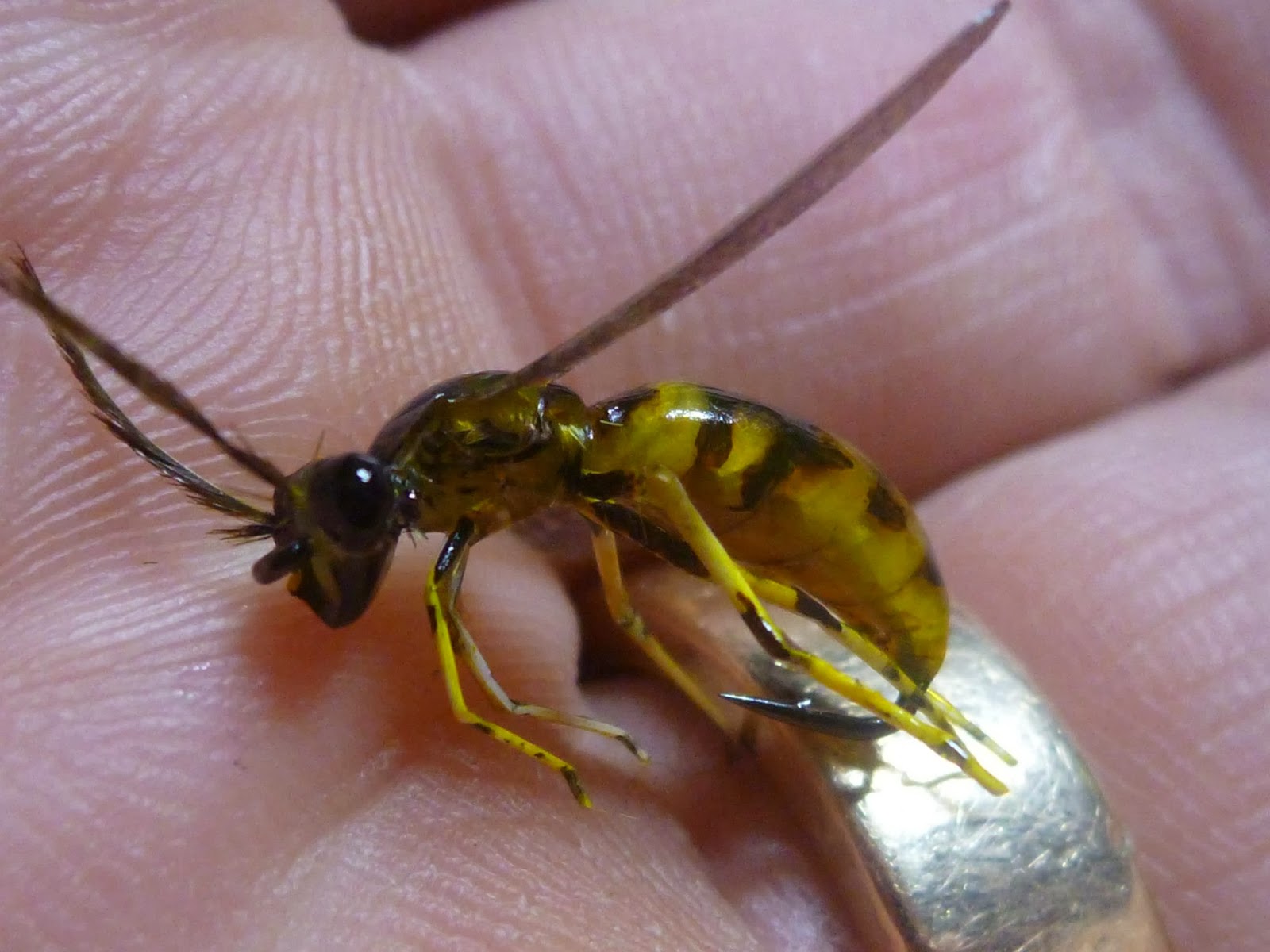
Art from the vise in the far north: the ultra realistic flies of Markus Hoffman

Winter is rapidly approaching and trout fishing, like the warm weather, is a distant memory. Desperate for anything related to my favorite pasttime, I spend evenings in the garage cobbling together poorly made wooly buggers and chernobyl ants, and while my standards are low, I still produce an embarrassing amount of flies worthy only of the trash can. Unfortunately, after seeing a particular fly in my Facebook feed, it seems all my flies are worthy of the garbage can....


Markus, rehydrating after a particularly grueling session.

Meet Markus Hoffman, a young flyfisherman and fly tyer from Sweden. Amazingly, he only bought his first vise in 2011 after trying his hand at tying with some leftover materials from friends. From those humble beginnings, he immersed himself in tying and made up for lost time, quitting his day job as a construction foreman and starting his own fly tying business just last year. Markus was gracious enough to answer some questions.

How did you get into tying such ultra-realistic flies? Did you have a mentor or did you teach yourself?

The first flies was not that good looking but as I registered to Facebook the world of flytying expanded. Martin Rudin, Barry Ord Clarke and Ulf Hagström recieved a lot of curious questions. Mr. Rudin later became my friend and mentor. His style of semi-realistic fly tying is how I started. From there the step to ultra-realistic is not far. When I started to create lifelike flies, I just googled up the insect and figured out a way to tie it.


Do you use conventional materials and tools to tie these flies?

The materials I use are mostly basic stuff, but a key to small fly tying is the thread. I only use UNI-Thread 17/0 through out all my tying. I am also a hunter and strive to use as much as possible from the forest where I live.

Even your "fishing" flies, as opposed to your art flies, have an incredible amount of detail and effort. How much time do you spend tying?

Last year I quit my job as a foreman building contractor and started my own company markushoffman.com, therefore I am tying flies every day of the week. If there are no flies ordered, I fill up my own fly boxes. This time of year people buy realistic and fishing flies as christmas gifts.


How about fly fishing? Judging by some of your photos, you don't spend all your time in front of the vise! 

Fly fishing is the drug for me. I go up north as soon as there is a chance. Fly tying has taken me fishing as well. If there is a tying event it often comes with fishing included. This year has taken me to both Norway and Austria. I am blessed to have the opportunity to fish as I work.


And here's the proof...

Most importantly,  how many flies did you have to tie in order to afford that amazing tattoo?

It was quite expensive so I would say about 35 realistic flies covered the costs for it. The tattoo took 17 hours, but it was so worth it. It is one of my trademarks and at fly tying shows I wear a tank top to draw some extra attention.


Markus spends about two hours making one of his ultra-realistic mosquitoes or mayflies, and they're displayed in a small glass bottle with a handwritten, aged label. If there's a specific insect you'd like to him make, let him know and he'll try to work with you. I'm curious what he'd charge for a Cicada!
Visit Markus at markushoffman.com, or on see more of his amazing work on his Facebook page.

The Swedish flyfishing scene is incredibly fortunate to have guys like Markus as ambassadors of the sport, destroying the stereotypical image of a fisherman that we're all trying so hard to break out of. Sweden is probably one of my favorite places on the planet, and I can't imagine anything better than paddling a canoe along the shoreline of one of her countless lakes, sipping a can of Starköl, and casting one of Markus' streamers at hungry pike under a midnight sunset.


Thursday, November 14, 2013

The Killer Bug

Nope, not Ebola, H1N1, or SARS, though this Killer Bug was in fact designed to wipe out an entire species.

(from http://www.rk-flyfishing.de)


A few weeks ago, I found and watched a British fly fishing show on YouTube, Search and Sight fishing with Oliver Edwards. An entertaining show, while possibly unfamiliar to non-British anglers, it concerned itself with the famous river keeper, author and flyfisherman, Frank Sawyer. Even the beginning fly angler is familiar with his most famous creation, the Pheasant Tail Nymph, but he also invented a few other flies, among them is the Killer Bug. I hadn't heard of this fly, but I was very intrigued when I saw Oliver Edwards tie it on his show. It was so simple, and apparently quite effective. Here's the video, provided it hasn't gotten removed:


After watching, I decided to embark on some internet research and I found that this historical fly has a very interesting history. Originally designed to expedite the removal of the grayling from the River Avon (considered a pest at the time), it consists of nothing more than a hook, copper wire, and a few wraps of grey wool. But, because flyfishers are decidedly wierd and prodigal squanderers of money, it can't just be any "grey wool", mind you, but it has to Chadwick's 477 grey wool. A storied, almost mythical wool, the original recipe was lost in a fire some four decades ago and no one has been able to faithfully reproduce it since. It's also a wool that sells for absurd prices on Ebay. It's somewhat grey, with a bit of pink and brown, but apparently the real colors miraculously manifest once the fly is wet, at which point it looks sort of wet grey, with a bit of wet pink and wet brown. I jest, apparently it becomes somewhat translucent, displaying the reddish copper beneath, and resembles a pink freshwater shrimp.

The Yarn. THE Yarn. ( Image from funkyflytying.co.uk)

Also it can't just be the regular "copper wire" you buy from your fly tying supply, that's not nearly red enough and it's far too thick. Frank Sawyer used wiring from aging electronic devices and legend has it he tied these flies without the benefit of a vise. Apparently the thin strands of copper wire twisted inside of speaker wire are an acceptable substitute.

Armed with regular old grey wool and some speaker wire, I'm going to make a handful of these nymphs and fish them next year with not only a keen awareness of the history behind them, but also the fact that I'm using the wrong yarn.

Thursday, October 31, 2013

Gear Review : Western Visions Lanyard


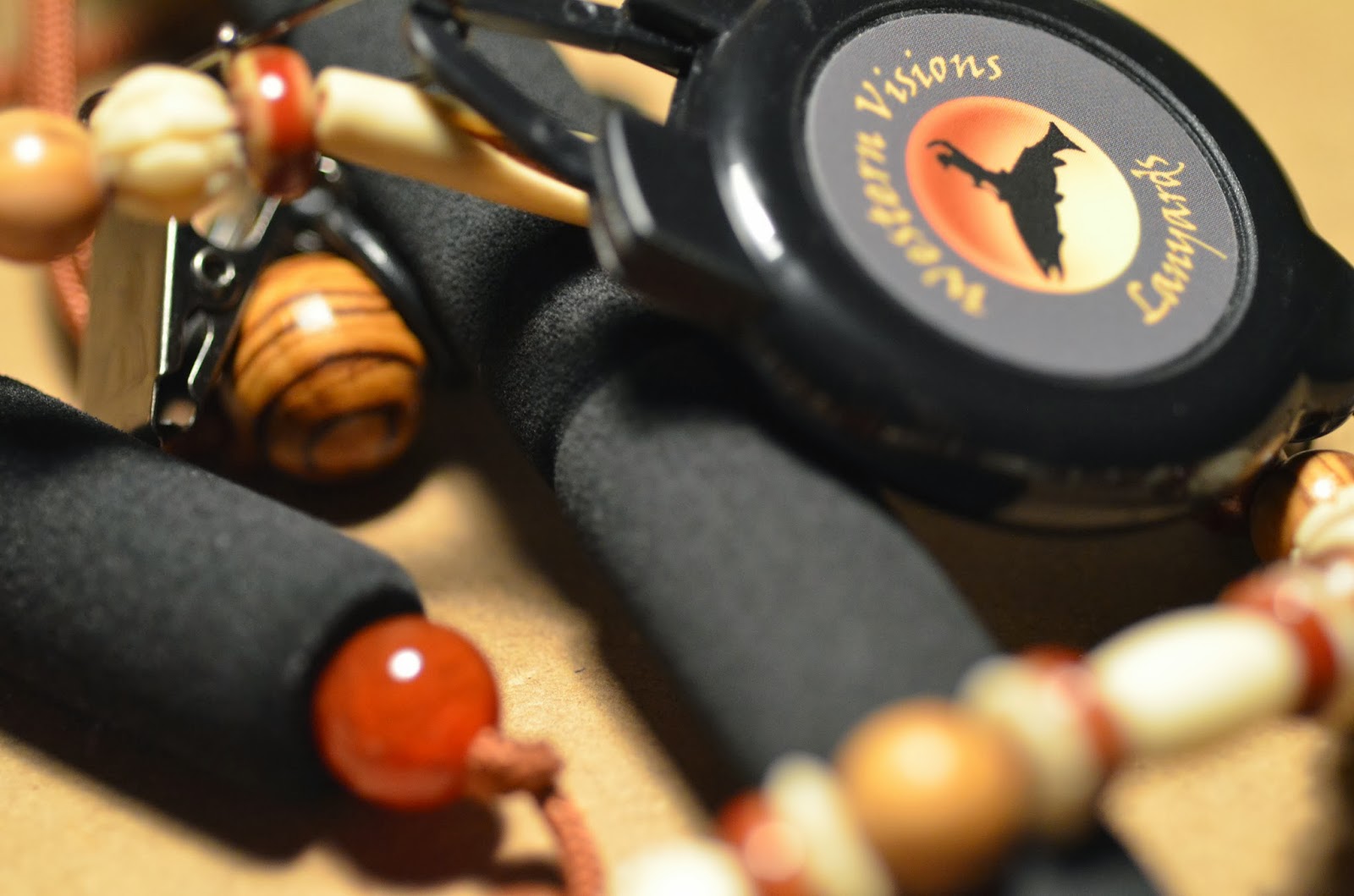
I've been wanting to try a lanyard for a while, and bugged my wife to make me one to no avail for the better part of a year. Which is probably a good thing, because neither one of us knows what a lanyard needs to make it function as a lanyard should. Fortunately, I won a lanyard from Western Visions Lanyards in a contest a few weeks ago, and my wife is now at peace. First things first, it's got beads. Lots of beads. Bone beads, wood beads, fire agate beads. I like the way it looks, but some might prefer something a bit more understated. I can't help but feel a little like Flavor Flav while I'm on the river, but that's more a function of wearing a lanyard full of tools than it is the choice of materials. Speaking of materials, this lanyard is very well made, thoughtfully laid out, and beautifully designed. They feature a foam tube that sits behind your neck for comfort, a net holder, a safety breakaway connector, tipper holder, 4 strong snap snivels, and clips at the front and back for attaching the lanyard to your shirt. (The one on the back allows the weight of a net to hang from your shirt, while the clip at the front prevents the lanyard from flailing all over the place.) The design is practical and well thought out. 

I've used it a few times now, and I find that it really shines on those short trips when you just want to grab the bare essentials and head out the door with a minimum of fuss. I'm lucky enough to live a few hundred feet from a trout stream, and when dinner is on the stove and my wife graciously gives me 30 minutes to fish the evening rise, having this lanyard loaded and ready to go on a hook in the garage means more time on the river, and that's never a bad thing.


The website has a large variety of one of a kind lanyards for sale, and if you're after a specific color scheme to match a rod, reel, or a set of grillz, they'll work with you to make your custom lanyard. I'm a sucker for unique items, and I like knowing that no one else out there has this exact lanyard, and every single one is handmade and one of a kind. I didn't get to pick the color, but I really ended up liking the color combination and choice of bead materials, and think it looks fantastic with my bamboo rod.


Tuesday, October 15, 2013

Fly fishing at 2500 meters


Glarus
The soul of Swiss flyfishing lies in the mountains, and if there's anything Switzerland has a lot of, it's mountains. And where there are mountains, there are plenty of unspoiled, painfully blue alpine lakes. With around one thousand of these alpine lakes capable of holding trout, there are plenty of possibilities for the fly fisherman who's willing to work to catch some beautiful alpine jewels in salmonid form. Some are an easy half hour stroll from a parking lot, while others involve a cable car, an overnight in an alpine hut and 8 hours of death-defying scrambling over mud and talus overlooking thousand foot drops, wondering if you're ever going to see your newborn daughter again and thinking "I love fishing but this isn't worth it oh god why am I here", your friend laughing at you while frantically trying to hide the very noticeable glint of fear and uncertainty in his eyes.

The Muttsee, Glarus

In 2010, we fished the Muttsee in Glarus. After a cablecar ride and a 3 hour hike, we were casting to rising lake trout up to around 12 inches. We fished in solitude until dusk, then made our way to the nearby alpine hut, were we had a hearty family style dinner with a bunch of curious hikers who hadn't really seen many people flyfishing up here.


Grialetschsee, Graubünden 


In 2011 we visited the Grialetchsee, in the mountains above Davos. There were tons of
small browns and char that were taking anything we would throw at them, so after a while we moved on to some other lakes for more eager, small fish, and then just spent day two hiking.


Fortunately, when hiking to these lakes, you don't need to bring all that much, thanks to the dense network of Swiss Alpine Club huts. Thanks to the SAC, you don't need to bring a tent, sleeping bag, camp stove, extra water, and food for meals. Generally costing around 50 bucks a night including a satisfying dinner as well as breakfast, they're a bargain, as long as you don't mind sleeping hostel style with a bunch of sweaty hikers.

A steaming pot of barley soup, and some generous beers with a view.


However, you do need to be prepared for anything when it comes to the weather. In 2010 and in 2011, in the height of summer, we encountered unexpected snowstorms. Not only can you get dangerously cold and wet, but the footing can become very precarious on some of the more exposed trails, some of which are extremely unsuitable for people without some alpine experience and who aren't comfortable with heights and exposure.

Those chains aren't just for decoration.

Middle of summer. No kidding.
That's not to say all these places are difficult to get to. One alpine fly fishing only lake I fish on a regular basis is nothing more than a five minute walk from the cable car station. It's stocked, so you can take fish (up to three) guilt-free, and it's pretty enough. Naturally, along with the ease of access comes the crowds. Not only are there a decent amount of fly fishermen, but you might also encounter school trips, dog walkers, and hikers.

As far as the fishing itself goes, I took a 6 weight both times, along with an assortment of dries, streamers, and nymphs. (Flies don't weigh that much, go hog wild.) It can get windy, so I left my favorite 4 weight at home. I've seen and caught char, lakers, grayling, and brown trout in various alpine lakes. I haven't caught any huge ones yet, but that's never bothered me before.
One of two lakers we kept for dinner.


Wednesday, October 2, 2013

The Wrap, Week 40


Here's what's interesting (according to me, at least) in the world of fly fishing this week:

News:

How the Government Shutdown Affect your Fishing: They closed Yellowstone. If I happen to be on a trip to fish in a spot that gets shut down because a bunch of childish mouthbreathers can't manage to act like adults, hooooooly shit.

Climate Change Spells Trouble for Anglers: More depressing news. "The science is telling us that in the lifespan of a child born today, 50 percent of the habitat suitable for coldwater species of fish will no longer be suitable for them."  I should stop believing in Science, it obviously works for some people. Mostly the same ones that shut down Yellowstone.

Fishing for Schools: how to get kids hooked on learning: A charity that gets kids into fishing. Can't argue with that.

Deals and giveaways:

Subscribe to the Pulp Fly newsletter, get a chance to win an Abel reel.

Subscribe to Fly Fishing and Fly tying Magazine (UK), get a free Grey's GRXi Fly line.


Videos:

Trout in Plain Sight: a 30 minute film on fly fishing in Patagonia

An interesting video on British poachers. I hate poachers. Especially British ones.

April Vokey teaching Steve Harvey how to cast.

My First Fish:  A beautiful short film about a dad taking his son flyfishing. Guaranteed to tear up Dads, Dads with Dads, Dads without Dads, and Dads with Dad issues. (I'm looking at you, guy who gets a lump in his throat when he listens to Cat Stevens singing "Father and Son")

7 Degrees South: The full 1 hour+ long movie about fly fishing Alphonse Island. I've only watched the trailer, it was great, and as soon as I have some time I'll watch this.